

From the Wilderness Medicine Handbook: Helicopter Evacuation
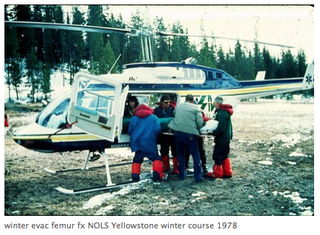
Mark your location with tightly anchored, brightly colored markers. Yellow, red, blue, orange are good signal colors especially if they are Day-Glo. Dull colors are not very useful. Background contrast is important. Use your signal mirror.
Landing zones that are 60-foot in diameter are best. Think about a football field sized space. Avoid holes under ridges, which can create tricky wind changes for the pilot. Clear loose objects from the landing zone.
• Approach a helicopter only when the pilot motions you to do so.
• Do not walk behind a helicopter. The tail rotor spins fast and is difficult to see.
• Do not approach form uphill.
• Be careful on snow. Don’t accidentally slide toward the helicopter.
• Stay low when you are around the rotors.
• Control people on the landing zone. Don’t carry objects that stick towards the rotors.
• Be prepared to use little verbal communication over the roar of a helicopter engine and rotors
© Wilderness Medicine Handbook – 2010 Wilderness Medicine Institute of NOLS – All rights reserved.

From the Blog
Keep Reading

Case Study: Dental Emergency while Rafting
The Setting You are on day three of a 4-day rafting trip on the Rogue River in Oregon. The trip…
September 8, 2025
Case Study: Sea Kayaking Slip
The Setting You are enjoying an amazing day of paddling on Prince William Sound in Alaska. The views have been…
August 11, 2025
Gap Year Pros and Cons: Solo vs. Group
Explore the gap year pros and cons of solo vs. group programs to find the right balance for you between…
July 16, 2025Stay in the Field
Get expedition stories, leadership insights, and course updates delivered to your inbox. No spam, no fluff, just the good stuff from the backcountry.
Join 45,000+ subscribers. Unsubscribe anytime.